FBA Roadmap Review - Is Warner Fields' Course Worth It?
In this FBA Roadmap review, I took a closer look at Warner Fields and Miles' Amazon arbitrage training to see what you're actually paying for and whether the course gives you much of an advantage over learning the business yourself.
The strategy is based on buying existing branded products for less than they're selling for on Amazon.
You're looking for pricing differences large enough to leave a profit after Amazon fees, shipping, prep and the original cost of the product.
There's nothing particularly secret about that.
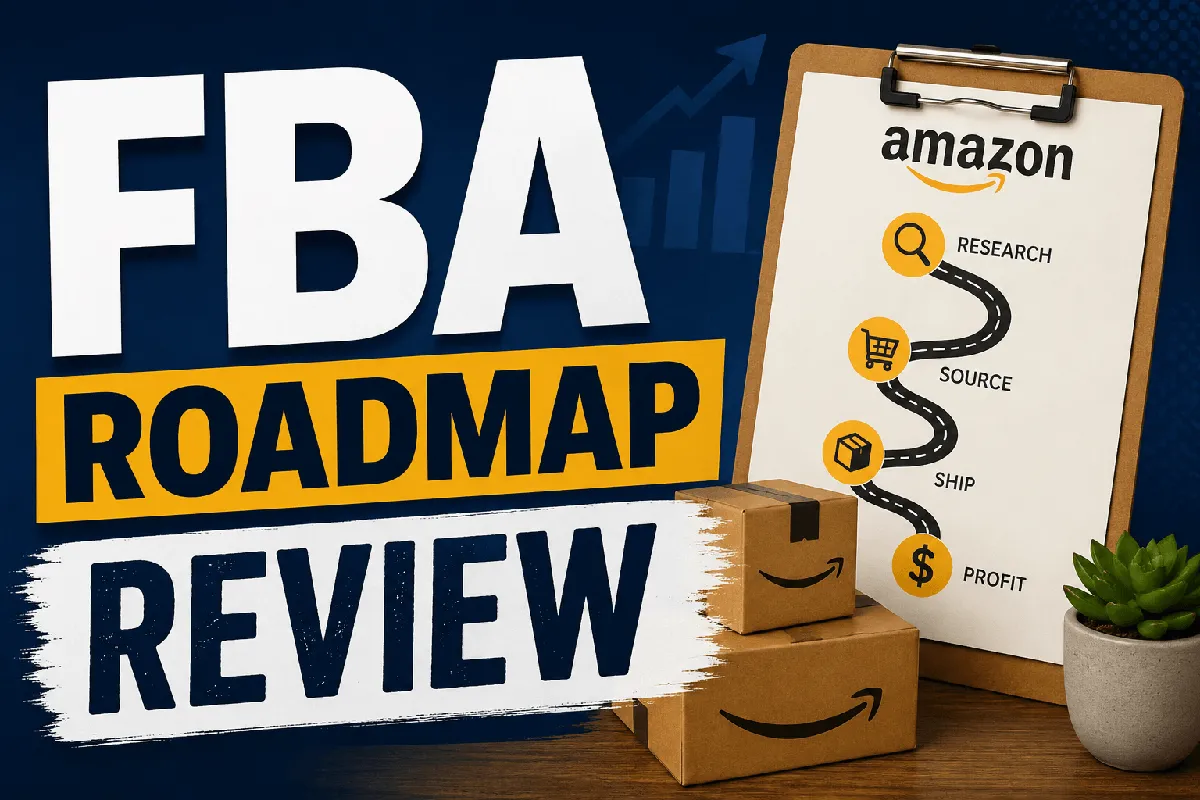
What you're paying for here is having the process organized for you. The training walks through sourcing, analyzing products, prepping inventory, shipping into Amazon and eventually scaling.
There's also a private community, weekly calls, software discounts, ungating resources and additional training from experienced sellers.
I think that distinction matters because you can learn Amazon arbitrage without buying a course. Warner himself has published a large amount of free content.
One course buyer I found made essentially the same point: they found the program helpful because everything was organized, while acknowledging that much of the underlying information can be found online for free.
So for me, the value isn't access to some hidden sourcing method. It's whether having everything laid out in order, plus ongoing access to people already doing it, saves enough mistakes and wasted time to justify paying for it.
The business model itself is where I'm more cautious.
You don't own the products you're selling, and you don't control the marketplace.
A profitable opportunity can become considerably less attractive when more sellers discover it and start competing on price.
You're also continually looking for new inventory because a deal that works today isn't necessarily something you'll be able to keep buying six months from now.
That makes this much more hands-on than the word "FBA" sometimes suggests. Amazon can store and ship your inventory, but you're still responsible for keeping profitable products coming through the business.
Customer feedback on the training itself is strong. One current Gumroad listing shows a 4.9/5 rating from 86 ratings, while another Fields of Profit listing shows 4.8/5 from 156 ratings.
Whop also carries positive member feedback, although the number of reviews there is much smaller.
That makes me considerably less concerned about the quality of the course than I am about whether Amazon arbitrage is the right business for someone in the first place.
Pros
Complete Amazon arbitrage training in one place
Weekly calls and private community
Lifetime access to future course updates is advertised
Strong ratings on the platforms selling the training
Useful ungating and software resources
Cons
Inventory requires additional capital
Profitable products can become more competitive
You need to continually source new opportunities
Much of the underlying information can be learned for free
Your business remains dependent on Amazon
What Is The FBA Roadmap?
The FBA Roadmap is an Amazon selling course and community created by Warner Fields, better known as Fields of Profit, together with Miles of Flips4Miles.
The training focuses mainly on online and retail arbitrage. Instead of developing your own products, you're finding existing branded items being sold below their typical Amazon price and reselling them for a margin.
Online arbitrage means doing that research and purchasing through websites, while retail arbitrage involves finding inventory in physical stores.
The course takes you through that process from the beginning. It covers setting up your seller account, understanding Amazon's fees, reading product data, using sourcing software, buying inventory, preparing products and sending them into FBA.
Where the approach becomes more interesting is the emphasis on developing your own sourcing process rather than simply receiving a daily list of products to buy.
You're learning how to look at an opportunity, work out whether the numbers make sense and decide whether it's something you'd actually put money into. That makes the research skill itself a major part of what you're learning.
The program then continues beyond the initial setup with live sourcing sessions, weekly calls and a private community where members can ask questions as they start applying the strategy.
So I wouldn't describe this as a done-for-you sourcing service. It's primarily training designed to teach you how to find and evaluate your own Amazon deals, with ongoing support available while you do it.
Who Is Warner Fields?
Warner Fields is the creator behind Fields of Profit, where he documents his experience selling on Amazon and teaches other sellers how to source products.
He started experimenting with online businesses while he was still in college. According to Warner, he initially tried dropshipping before moving into retail arbitrage and eventually Amazon FBA.
He has since shared sales screenshots, sourcing trips, warehouse operations and other parts of running the business publicly through his content.
His YouTube channel has grown to more than 100,000 subscribers, with videos covering everything from individual sourcing trips to detailed breakdowns of products he's sold.
That public track record is useful because you don't have to rely entirely on a course sales page to decide whether he understands the business.
Miles, known online as Flips4Miles, is also closely involved with the training.
He built his audience around reselling and Amazon, and the two have collaborated extensively on sourcing content and education.
I think that's relevant because this isn't a course built around an anonymous instructor or someone whose only visible business appears to be selling courses.
There is a substantial amount of public content showing Warner actively involved in the type of selling he teaches.
I still wouldn't treat revenue figures or screenshots as evidence of what a student will achieve. They tell me more about his experience as a seller than they do about the likely results of joining his program.
What Do You Get Inside The FBA Roadmap?
The core course contains more than 20 hours of video training, taking members through the practical steps involved in running the business.
Beyond the main lessons, members get access to a private Discord community and weekly Zoom calls with Warner and Miles.
There are also live sourcing sessions where members can watch the product-research process being carried out rather than only seeing it explained in a prerecorded lesson.
Another part of the membership deals specifically with ungating. Amazon restricts some categories and brands until sellers meet certain requirements, so the included Master Ungating Guide walks through getting approval to sell products that aren't immediately available to a new account.
There are also resources for situations that can come up after you start selling, including templates for dealing with intellectual-property complaints and customer issues, along with discounts for prep centers and various software tools.
Two optional additions are available depending on which package you choose.
The Profit Vault contains breakdowns of ten products Warner and Miles previously sold, showing how they discovered each opportunity and what they learned from it. These are case studies rather than current leads.
The highest package adds a VA Hiring Bundle, including a job-post template, interview questions, training documents and guidance for hiring someone to help with sourcing.
How Much Money Do You Need to Start?
The course fee isn't the biggest expense I'd plan for. Inventory is.
With arbitrage, you're spending your own money on products before you know exactly how quickly they'll sell.
That means I'd want enough available cash to spread purchases across several products rather than putting most of my budget into one opportunity.
There are other expenses to account for as well. Amazon charges selling and fulfillment fees, and depending on how you operate, you may also pay for prep, shipping and sourcing software.
This is where having a larger starting budget gives you more flexibility. If one batch takes longer to sell than expected, you can still purchase other inventory instead of waiting for that money to come back.
I'd therefore look at the course fee and operating capital separately.
If paying several hundred dollars for training leaves you with almost nothing available for inventory, I'd wait.
Knowing how to source products doesn't help much if you don't have enough cash left to test what you've learned.
I don't think there's one magic amount everyone needs. The more important question is how much money you can comfortably have tied up in stock without needing it back immediately.
The Biggest Problems With Amazon Arbitrage
The first issue I'd pay attention to is how quickly a good deal can change.
You might find a product with healthy margins, buy 20 units and send them to Amazon.
By the time they're available for sale, the price could have dropped. That doesn't automatically make the product a loss, but it means the profit you calculated before buying isn't guaranteed.
Inventory can also get stuck.
If something sells slower than expected, your money remains tied up in those units. Eventually you may have to lower the price to get the stock moving, which reduces the return further.
Then there are restrictions. Certain brands and categories require approval, and sellers can encounter intellectual-property complaints even when they believe they've sourced legitimate products.
The fact that the training includes ungating resources and templates for dealing with IP issues is useful, but it also shows that these situations are part of operating the business.
The other limitation is scalability.
When you discover a great clearance or online deal, there may only be a limited amount of inventory available.
Once it's gone, you need another opportunity. Scaling therefore isn't simply a matter of spending more money on the same winning product.
None of that means arbitrage can't work. It means the business depends heavily on repeatedly making good purchasing decisions.
That's the skill I'd want to develop rather than judging the opportunity based on one profitable sourcing trip.
The FBA Roadmap Final Verdict
After looking through the program and the feedback surrounding it, I think Warner and Miles have put together a solid training option for people who specifically want to learn Amazon arbitrage.
The strongest reason I'd consider joining isn't access to some unique strategy. It's having experienced sellers available while I'm trying to apply it myself.
That becomes more useful when you're dealing with real inventory and mistakes can cost actual money.
I also like the one-time payment model. Assuming the lifetime access and updates advertised at checkout remain part of the offer, you're not under pressure to keep paying every month just to retain access to the material.